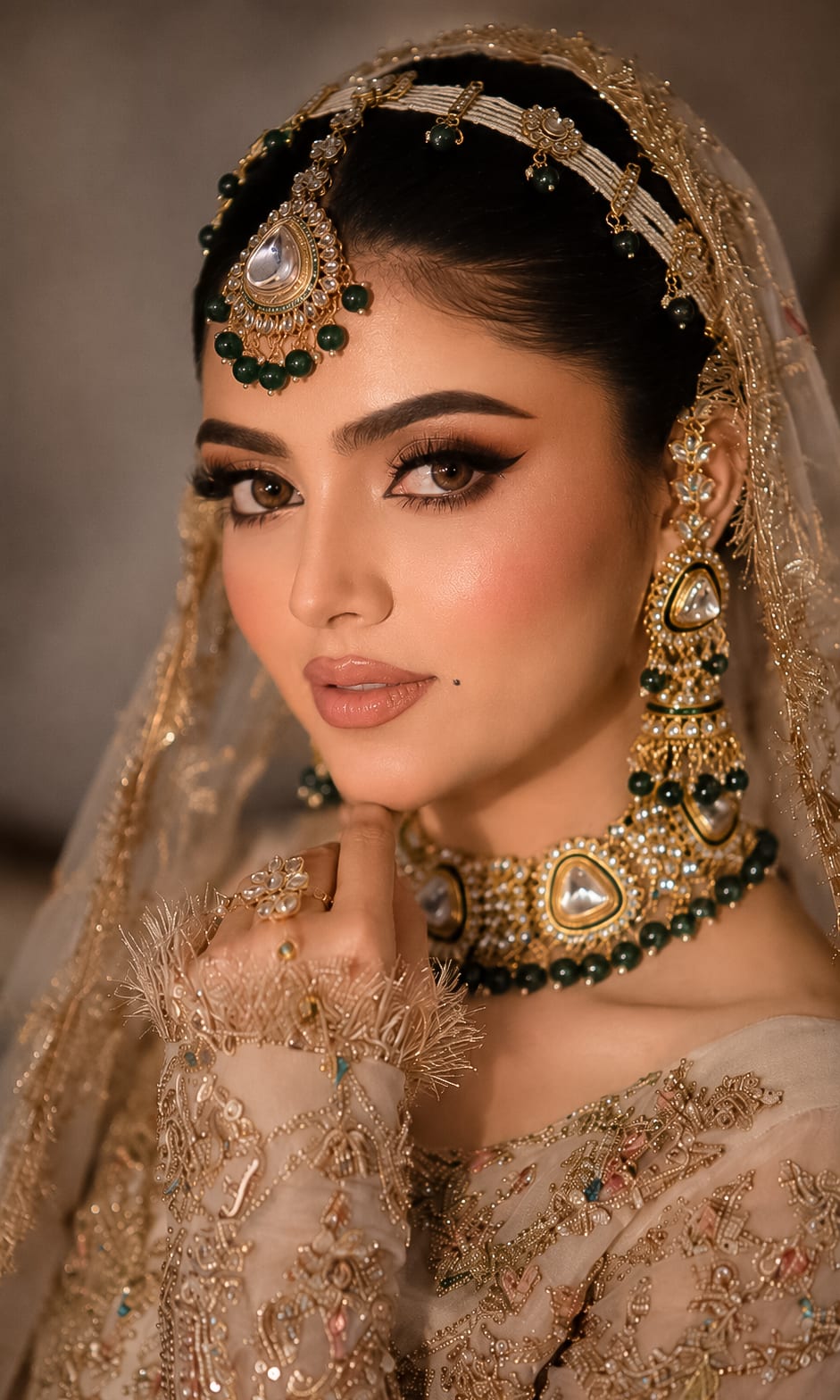
Judge consistency across complete weddings
Start with the portfolio, then ask to see at least two complete galleries from real weddings. Ideally, one should resemble your event in scale or setting. A complete gallery reveals whether the photographer can maintain color, focus, skin tones, and storytelling from preparation through the nikah, stage portraits, dinner, and rukhsati. It also shows how much attention is given to parents, siblings, elders, guests, decor, and transitions, not just the couple portraits selected for public display.
Look closely at ordinary and difficult moments. Can you understand the sequence of the event without an explanation? Are indoor photographs clear without making the room look unnatural? Do group photographs remain orderly when the stage is busy? A styled shoot or a short carousel can demonstrate taste, but it does not demonstrate sustained coverage under real time pressure. Ask whether the gallery was photographed by the person proposed for your wedding, especially when you are speaking with a studio that has several teams.
What to inspect in a full gallery
- Coverage depth
Check preparation, establishing details, rituals, candid interactions, formal groups, entrances, and departures rather than counting only dramatic portraits.
- Editing consistency
Compare skin tones, clothing colors, exposure, and contrast across daylight, stage lighting, and dark reception areas.
- Moment selection
Notice whether reactions around the central action are preserved, including parents and guests who matter to the couple.
- Usable variety
Look for wide scenes, mid-range storytelling, close details, natural candids, and composed family photographs in a coherent balance.
Confirm exactly who will arrive
A studio name is not the same as an assigned crew. Ask for the name and role of the lead photographer, second photographer, video lead, assistants, and any specialist operator included in the proposal. Then request relevant work made by those people, not only the studio's overall showcase. The agreement should explain whether named team members are confirmed, how a substitution would be communicated, and who has authority on site when the person handling your sales conversation is not attending.
Access should be discussed with equal precision. If a female photographer or videographer is required for bridal preparation, a women-only gathering, or a private family area, identify the exact event, location, and hours for that role. Confirm whether the person will create photographs, video, or both. Families differ, so do not rely on a vendor's assumptions about where any crew member may enter. Share clothing, privacy, and movement expectations in advance, and nominate someone who can answer access questions on the day.
Crew details to confirm
- Names and roles
Record who leads photography and video, who supports them, and which team member covers each preparation location.
- Relevant samples
Review a gallery or film created by the proposed lead rather than assuming every studio team works identically.
- Female crew access
State the spaces, schedule, medium, and privacy expectations for any female photographer or videographer requested.
- Substitution process
Ask what happens if an assigned person becomes unavailable and how any replacement's experience will be assessed and disclosed.
Choose a visual style and a working style
Words such as candid, documentary, editorial, cinematic, classic, and fine art are useful starting points, but different photographers interpret them differently. Ask each candidate to show several images that represent the term they use. Decide whether you prefer true-to-life color or a pronounced color grade, direct flash or softer light, energetic movement or composed portraits, and close observation or active direction. Also notice whether the treatment remains flattering and believable across varied skin tones and colorful wedding clothes.
The photographer's behavior shapes the photographs as much as the edit. If either partner feels awkward on camera, ask how posing is introduced and how much direction is given. If you value candid family interactions, ask how the team stays observant without repeatedly interrupting them. Share references to explain a mood, not to demand an exact copy of somebody else's wedding. A productive conversation should translate your references into an approach that suits your people, clothing, spaces, and available time.
A simple style test
- Pick ten photographs
Select images from the candidate's own work that you would be happy to receive, then explain the light, color, emotion, or composition you value in each one.
- Identify dislikes
Name a few treatments you would rather avoid, such as heavy skin smoothing, tilted frames, prolonged posing, or strongly muted color.
- Discuss direction
Ask how the photographer works with camera-shy couples, large families, children, and people who have limited time for portraits.
- Set priorities
Agree whether candid coverage, couple portraits, family groups, decor, rituals, or guest interactions need the greatest share of limited time.
Plan for family dynamics before the stage fills
Family photographs can become the most revisited images from a wedding, yet they are difficult to organize without context. Give the photographer a concise group list with names and relationships, not a collection of vague labels. Mention elders who should be photographed early, relatives with limited mobility, children whose bedtime matters, and anyone who must leave before dinner. If there are bereavements, separations, strained relationships, or combinations that should be avoided, share that information privately and respectfully rather than expecting the crew to infer it.
Appoint one informed coordinator from each relevant household or family group. That person can gather relatives, identify an aunt the crew has never met, and tell the photographer when a ritual is about to begin. This is more effective than asking the team to learn an extended family tree during a loud event. Keep the formal list realistic for the portrait window, order it so elders and young children can finish first, and leave room for unplanned combinations without allowing the entire evening to become a queue.
Details for the family photo plan
- Named groups
Write each essential combination using names and relationships, then mark the few that cannot be missed.
- Sensitive combinations
Privately note people who should not be placed together or circumstances that require careful wording.
- Timing needs
Prioritize elders, guests with mobility needs, families with young children, and anyone leaving early.
- Family coordinators
Provide names and phone numbers for people who know the guests and can gather each group promptly.
Test low-light skill and contingency thinking
Many event spaces change character after sunset. A marquee may combine colored stage LEDs, dark guest areas, bright video lights, and reflective clothing in the same frame. Ask to see a full gallery photographed in similarly difficult light, including movement on an entrance or dance floor and wide photographs of the room. Discuss the team's approach to flash, continuous light, mixed color, and venue restrictions. The goal is not a technical inventory, but evidence that the photographer can make considered decisions when available light is uneven.
Then ask how the studio prepares for illness, equipment failure, damaged cards, power interruption, severe weather, transport delays, and file loss. Useful answers may cover access to replacement cameras and lighting, redundant recording where appropriate, spare media and power, a qualified replacement network, and multiple stages of file storage. Contingency planning reduces avoidable risk, but no plan can remove every disruption. Focus on a credible process, clear communication, and contract terms that explain responsibilities if coverage is affected.
Practical resilience questions
- Difficult light
Can we see a complete event with lighting conditions close to ours, including entrances, groups, and candid movement?
- Crew illness
Who would contact us, how would a qualified substitute be selected, and what does the contract provide if coverage cannot proceed?
- Capture failure
What recording, media, battery, and replacement procedures are used during an event?
- File care
How are files copied and protected after the event, and when does the studio's archive responsibility end?
Put the contract, privacy, and deliverables together
Read the contract beside the proposal and your event schedule. The documents should agree on client and supplier identities, dates, locations, events, coverage hours, assigned roles, fees, payment stages, travel, overtime, postponement, cancellation, substitutions, and the process for changing scope. Important promises made in a call or WhatsApp conversation should be added in writing. Ask questions before signing, keep the final version and receipts, and do not treat a booking payment as a substitute for complete terms.
Deliverables need the same detail. Record what edited photographs, galleries, films, teaser content, albums, or frames are included, along with formats, access conditions, selection steps, revision limits, and a written delivery schedule for each item. Clarify whether unedited files are excluded and what personal printing or sharing rights you receive. Privacy is separate from delivery: decide whether the studio may post faces, children, preparation scenes, women-only moments, or any material before or after a specified date. If privacy matters, the permission and any exceptions belong in the signed agreement.
Clauses worth locating before you sign
- Scope
Every event, venue, date, start and end point, crew role, and included service should match the final plan.
- Deliverables
Define quantities or ranges where relevant, file types, gallery access, film versions, physical products, revisions, and delivery milestones.
- Usage and privacy
Specify client rights and whether the studio can publish, submit, advertise, or share any image or film with third parties.
- Change and disruption
Understand overtime, rescheduling, cancellation, substitution, venue restrictions, and the remedies described for incomplete service.
Use one interview checklist for every candidate
Interview a short list using the same wedding outline and the same core questions. Consistency makes the answers comparable and prevents an engaging conversation from hiding a missing service. Send the dates, cities, venue status, expected events, rough timings, required crew access, and desired outputs before the call. During the discussion, listen for direct answers, thoughtful questions about your priorities, and a willingness to distinguish what is included from what remains undecided.
Afterward, request a written proposal and mark every assumption that still needs confirmation. Compare evidence and clarity, not just presentation. A photographer who understands your preferred style but cannot identify the attending team may not be the right operational fit. Another may have strong systems but an approach that makes you uncomfortable. The final decision should account for the work itself, the people making it, the plan for your families, and terms both sides can realistically follow.
Wedding photographer interview checklist
- Availability and scope
Are all our dates, locations, preparation periods, ceremonies, and portrait windows available and included?
- Assigned team
Who will attend each event, what will each person do, and can we review work by the proposed lead?
- Complete galleries
Can we inspect full weddings with a similar scale, schedule, and indoor or low-light setting?
- Creative approach
How would you describe the capture, posing, lighting, editing, and color choices visible in those galleries?
- Access and family needs
How will female crew requirements, private areas, family groups, elders, and sensitive relationships be handled?
- Contingencies
What processes address illness, delays, equipment problems, power issues, restricted access, and file protection?
- Delivery and privacy
Exactly what will we receive, through which method, on what written schedule, with what usage and publication permissions?
- Commercial terms
What are the payment, travel, overtime, change, postponement, cancellation, substitution, and dispute terms?
Final thought
Choose the evidence, process, and people together
A wedding portfolio should move you, but the hiring decision needs more than favorite images. Complete galleries establish consistency, an identified crew establishes accountability, and a careful conversation establishes whether the photographer can work respectfully around your families and access needs. Low-light examples and contingency answers then show how the team thinks when conditions are less controlled.
Before booking, bring those findings into one readable contract covering scope, privacy, deliverables, and change. You are not trying to predict every minute of a Pakistani wedding. You are choosing a creative partner whose work suits you and whose expectations are clear enough to support calm decisions when the day becomes busy.
Sources and further reading
These references informed the planning context. The article itself was written specifically for the ExposurePro Journal.