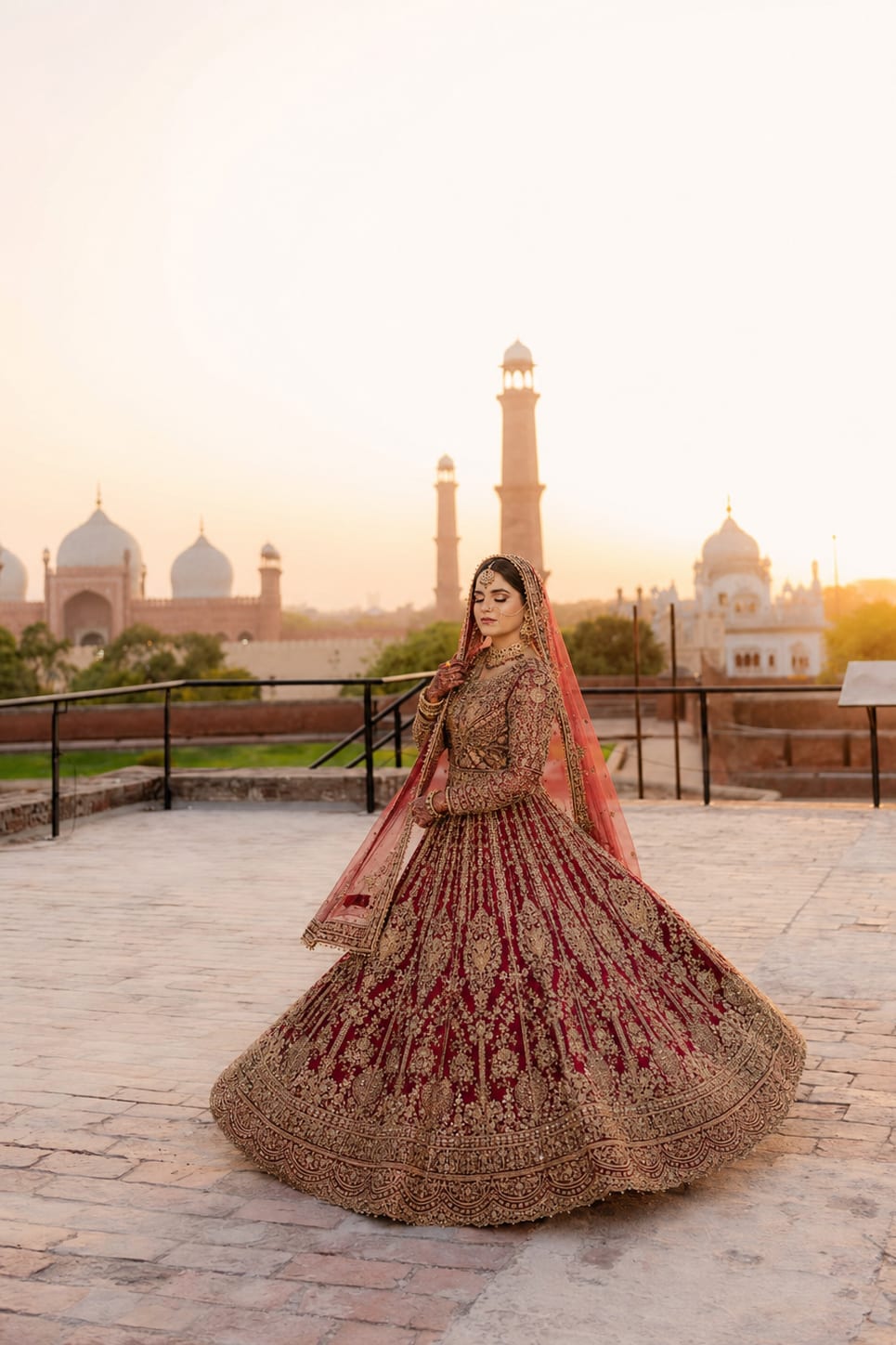
Make a light map, not a venue assumption
A lawn is not automatically soft and romantic, and a ballroom is not automatically dark. Direction, time, nearby walls, roof material, stage fixtures, reflective flooring, and guest layout all matter. Ask for a site visit during the hours when preparation, portraits, entrances, and the main ceremony are expected. If that is not possible, request recent phone video that slowly turns through each room without filters. A daytime sales tour is weak evidence for an evening event.
Draw a simple light map beside the floor plan. Mark windows and their directions, covered outdoor edges, low ceilings, mirrored walls, bright signs, LED panels, chandeliers, speaker towers, and the couple's path to the stage. Then note where a photographer can stand without entering a prayer area, blocking family, or crossing the video team's main angle. The map does not lock the coverage into one position. It reveals conflicts early enough to move a chair, adjust a stage cue, or choose a more workable portrait corner with venue approval.
Record these conditions for every key space
- Source
Window, open shade, tungsten-style fixture, fluorescent fitting, LED wall, moving stage light, candle, or photographer-provided light.
- Direction and height
Front, side, overhead, or behind the subject, including whether the source can be repositioned or only dimmed.
- Control
Who operates the house lights, whether a scene can be saved, and when photography may request a stable setting.
- Fallback
The covered, powered, accessible space that remains usable if weather or a technical problem removes the first choice.
Use getting-ready window light deliberately
For getting-ready photographs, one clear window with space beside it is often more useful than a large room filled with ceiling lights. Side light can show embroidery, jewelry, and facial shape while allowing the photographer to make small adjustments by turning the subject or changing distance from the glass. Check what the window faces, whether direct sun enters at the planned hour, whether tinted glass changes color, and whether curtains can soften or block the light. A window that looked gentle in the morning may behave differently late in the afternoon.
The room also has to function. Leave a clear area large enough for the outfit, relatives, beauty team, and photographer without moving hot tools across clothing. Ask whether overhead lights can be switched off briefly if they create an unwanted color mix, but keep enough safe working light for makeup and dressing. Remove plastic bags and room-service clutter before final portraits, not every personal item. Meaningful activity belongs in documentary frames; avoid turning preparation into a silent showroom merely for visual neatness.
Apply the same care to every person being photographed. Groom preparation, turban or sehra tying, family gifts, and quiet moments with parents deserve an intentional location too. If separate preparation rooms have very different light, the photographer may use different techniques rather than forcing them to match exactly. What matters is that the schedule accounts for movement between those rooms and that access and privacy are confirmed with the people involved.
A better room request
- Ask for usable window space
Request photos or a viewing of the exact room category, since a hotel may not assign the final room until close to arrival.
- Protect privacy
Confirm curtains, changing space, room access, and who may enter while still keeping a clear route for the photography team.
- Set a reset time
Choose one short point when a helper clears the portrait area so the beauty team can keep working before then.
Test mixed LED stage light and flash restrictions
Wedding stages often combine an LED wall, colored uplights, moving heads, overhead house fixtures, and decorative bulbs. Each source can have a different color, and some colors are difficult to correct without making another part of the scene look unnatural. Saturated magenta, green, or blue light falling directly on faces is especially influential. Ask the lighting operator for a neutral portrait scene with stable front light, then test that scene with the LED wall showing the actual content planned for entrances and formal photographs.
Dimming can change both color and flicker behavior, so a successful full-power test does not validate every cue. Photograph and record a short video of the dimmed scene, animated backgrounds, and any rapid color sequence. Agree when the neutral look will be used, such as immediate-family portraits or the nikah, and who can recall it. This is not a request to flatten the celebration into white light. It preserves expressive lighting for performance while giving skin tones and garments a stable interval when accurate color matters most.
Flash may be limited by venue policy, religious context, the officiant, performers, or safety concerns. Ask what is prohibited, in which zones, and for which moments. Also ask whether small off-camera lights on stands are allowed and where stands may be placed without narrowing an aisle. If flash is restricted, the photographer can plan faster lenses, steadier ambient-light positions, or a different portrait location, but no technique can create unlimited quality from absent or rapidly changing light. The couple should understand the tradeoff before the event rather than during it.
Questions for the lighting and venue teams
- Can one neutral scene be saved?
Specify stable front light and a calm background for formal portraits, with the final color chosen after an on-camera test.
- Who controls each source?
The LED wall, house lights, decor lights, and performance rig may belong to different operators.
- What does no flash mean here?
Clarify whether it applies to direct flash, bounced flash, off-camera lights, a particular ceremony, or the entire property.
Plan for flicker, haze, and a power transition
Some LED fixtures pulse too quickly for the eye to notice but still produce dark bands or uneven color at certain camera settings. Video and still cameras may respond differently, and a fixture can behave well at one brightness but flicker when dimmed. The practical check is a camera test across the lighting scenes that will actually run. The photography and video teams can then discuss shutter choices with the operator, but changing camera settings may affect motion rendering or exposure. Replacing or stabilizing the problem source before guests arrive is usually cleaner than relying on a workaround.
Haze has two meanings worth separating. Stage haze is deliberately added to reveal beams, while outdoor haze or poor air visibility can reduce distant contrast and change the appearance of the sun. More is not always more cinematic. Dense stage haze can soften faces, slow autofocus, trigger sensitivities, and obscure heritage or skyline backgrounds. For Punjab events, current official air-quality reporting can provide useful context close to the date, but it does not guarantee what a specific frame will look like. Keep a closer portrait option that does not depend on a clear distant view.
Power backup is also a photography question. Ask which circuits are backed up, how quickly the changeover is expected to occur, whether stage control and audio reboot, and whether preparation rooms and lifts remain powered. A generator label alone does not answer those questions. Request a venue or production contact who understands the distribution and can explain the tested sequence. Battery-powered camera lights are helpful for limited tasks, not a substitute for safely powering a full venue or moving guests through dark circulation areas.
Power details to confirm
- Backed-up circuits
Stage face light, LED wall, audio, house safety lights, preparation rooms, lifts, and outdoor pathways may not share one supply.
- Changeover behavior
Ask what turns off, what must reboot, and who pauses an entrance or ceremony if a transition occurs.
- Safe stand locations
Confirm cable routes, sandbags, weather protection, and boundaries for any photographer-provided lighting.
Plan golden hour from the exact date and horizon
Golden hour is not a fixed clock time, and sunset is not a promise of golden light. Start with a reliable sun table for the exact date and city, then use the venue's coordinates and physical horizon. A neighboring building, boundary wall, tree line, terrain, or heritage structure can remove direct light before the published sunset. Cloud, haze, dust, and rain may soften or block it. A location test and compass view are more useful than assuming every west-facing lawn will glow.
Work backward from a portrait-ready point, not from the moment the sun meets the horizon. The couple has to finish dressing, leave the preparation space, travel if necessary, enter the approved location, make final garment adjustments, and walk to the first composition. Build a compact must-have portrait set that can be completed in the best available light, followed by optional wider or more experimental frames. If the light changes quickly, finish the complete core set before changing lenses, outfits, or locations.
Check the table again when the final timeline is built and shortly before the wedding in case the date or location has changed. Use the result as an astronomical planning reference, not a weather forecast or a guarantee of visibility. Where heritage architecture or a public site is involved, sunset timing does not confer access. Written permission, operating hours, security restrictions, travel time, and a nearby approved alternative remain separate planning tasks.
Calculate the portrait window with these inputs
- Exact date and coordinates
Use a date-specific sun table for the city, then refine the plan around the actual venue rather than a seasonal rule of thumb.
- Effective horizon
Record when direct light leaves the chosen spot behind buildings, walls, trees, or terrain during a comparable scout.
- Readiness and movement
Count dressing, touch-ups, lifts, loading, travel, entry checks, walking, and garment placement before photography begins.
- Covered equivalent
Select a permitted porch, arcade, lobby edge, or windowed room that still supports a complete portrait set if outdoor light is unavailable.
Design rain and heat alternatives around comfort
A rain plan is more specific than saying portraits will move inside. Identify the exact covered location, ask how it is booked, check its background and light, and confirm that guests or decor will not occupy it at the same time. Map a dry route from the preparation room and vehicle. Keep umbrellas for movement, absorbent cloths for the floor, and a safe place for wet items away from electrical equipment. The person responsible for switching plans should make the call early enough that the couple is not left dressed and waiting at an exposed doorway.
Forecasts become more useful close to the event, but they remain uncertain. Use them to choose between prepared options, not to promise rain or clear skies. Historical climatology, including NASA POWER's monthly temperature, humidity, precipitation, and wind data, can help identify questions worth asking during early planning. It describes past multi-year patterns at a point; it is not a forecast for a wedding date and should not be presented as one.
Heat and humidity affect the people before they affect the camera. Heavy garments, layered dupattas, sherwanis, jewelry, and enclosed stages can make a long outdoor session uncomfortable even when the location looks beautiful. Plan shorter sets with access to shade or air conditioning, water that can be sipped without risking clothing, blotting and makeup support, seating, and time to cool down. Ask the couple what feels manageable in their actual attire. A photograph is not worth dizziness, damaged clothing, or forcing someone to remain outdoors after they ask to stop.
Comfort and garment kit
- For rain
Large umbrellas, shoe covers if appropriate, clean towels, a dry garment-lifting helper, and a non-slip route approved by the venue.
- For heat
Water, a quiet cooled room, a fan used carefully around veils, planned seated pauses, and shorter walking distances.
- For humidity
Blotting supplies, hair and makeup touch-ups, lens-acclimation time when moving from cold rooms, and breathable garment breaks where possible.
Ask city-specific questions without using city stereotypes
City-level climate records are a starting layer, not a description of every venue or wedding. Two properties in the same city can differ because one is enclosed, one is exposed, one has a blocked western horizon, and one has reliable covered circulation. Compare historical data only to shape questions about cooling, rain cover, wind exposure, and timing. Then replace those assumptions with venue observations, an exact-date sun table, a current forecast, and written operational answers.
The same caution applies to traffic, air visibility, and permissions. A city name cannot establish how long a transfer will take, whether a monument will admit a photography team, or whether the horizon will be clear. Check the exact route at a comparable time, consult the relevant authority for any controlled site, and monitor current official information close to the date. If a portrait concept depends on one distant view or one public location, design a second composition that works on private, confirmed premises.
A cautious planning prompt for four cities
- Lahore
For heritage or dense urban settings, verify the precise entry authority, operating window, route, horizon obstruction, and current visibility. Do not infer permission from public opening or from another couple's photographs.
- Islamabad
Check how nearby terrain, trees, and buildings affect direct light at the exact property, then confirm a covered transition between vehicles and the portrait or ceremony space.
- Karachi
Ask whether the specific site is exposed or enclosed, coastal or inland, and how its management handles wind, humidity, rain, cooling, and backup power. The answers belong to the property and date, not the city label.
- Faisalabad
Confirm whether the event moves among an urban hall, marquee, lawn, hotel, or family property, then test each route, stage-lighting setup, covered option, and generator transition on its own terms.
Final thought
Good light planning creates choices
No venue or month can guarantee beautiful light, and photography should not depend on one forecast, one sunset, or one lighting cue. Strong planning creates several workable conditions: a clean window-light area, a tested neutral stage scene, a clearly understood flash policy, a compact outdoor plan, and a covered alternative with safe access and power.
Those choices also protect the people in the photographs. When the team knows when to shorten an outdoor set, where the couple can cool down, who controls the lights, and what happens during a power changeover, technical decisions stop competing with comfort and ceremony. The result is not a promise that conditions will be perfect. It is a practical way to make honest, considered photographs from the conditions that arrive.
Sources and further reading
These references informed the planning context. The article itself was written specifically for the ExposurePro Journal.